Questions? (984) 205-1937
Water intrusion is one of the most serious and common problems for homes in the Raleigh area. Heavy seasonal rainfall, clay-heavy soils that trap moisture against the foundation, and a fluctuating water table across Wake County all push water into crawl spaces throughout the Triangle. Left unaddressed, standing water under your home causes wood rot, mold growth, pest attraction, and structural deterioration that gets more expensive to fix with every passing month.
Raleigh Crawl Space Repair installs professional crawl space waterproofing systems designed to capture, channel, and remove water before it causes lasting damage. Our solutions include interior french drains, sump pumps with battery backup, foundation crack repair, vapor barriers, and exterior drainage recommendations — all built for the specific soil conditions and wet seasons common across Raleigh, Cary, Apex, and the broader Triangle.
GET A FREE INSPECTION ›Crawl space waterproofing is the process of managing and removing liquid water that enters the space beneath your home. Unlike encapsulation, which controls moisture vapor, waterproofing deals with actual water — puddles, flowing groundwater, and surface runoff that finds its way through or under your foundation walls.
A complete crawl space waterproofing system typically includes three components working together: a perimeter drainage channel that intercepts water at the foundation walls, a sump pump system that actively removes collected water, and sealing measures that close the entry points where water gets in. Depending on the severity of the problem, we may also recommend exterior grading corrections, downspout rerouting, and foundation crack injection to reduce the volume of water reaching your crawl space in the first place.
The Triangle sits on a mix of Piedmont clay soils and coastal plain sediments that create specific challenges for crawl space drainage. Understanding why your crawl space is wet helps determine the right waterproofing approach.
Clay-heavy soils. Much of Wake County sits on dense clay that absorbs water slowly and holds it for extended periods. After a heavy rain, saturated clay acts like a dam around your foundation, building hydrostatic pressure that forces water through cracks, joints, and porous concrete into the crawl space.
Seasonal rainfall patterns. Raleigh averages over 46 inches of rain per year, with the heaviest months running from May through September. Tropical moisture from the coast and summer thunderstorms can dump several inches of rain in a single event, overwhelming natural drainage and pushing the water table upward.
High water table. Parts of Wake County, particularly low-lying areas near the Neuse River basin and areas east of Raleigh, have seasonally high water tables. When the water table rises above your crawl space floor level, water enters from below regardless of how well your exterior drainage performs.
Poor exterior drainage. Yards that slope toward the foundation, missing or clogged gutters, downspouts that discharge too close to the home, and improperly graded flower beds all direct surface water straight to your foundation walls.
Foundation cracks and deterioration. Over time, concrete block and poured foundations develop cracks from settling, tree root pressure, and freeze-thaw cycles. Even hairline cracks allow water to seep through when hydrostatic pressure builds on the other side.
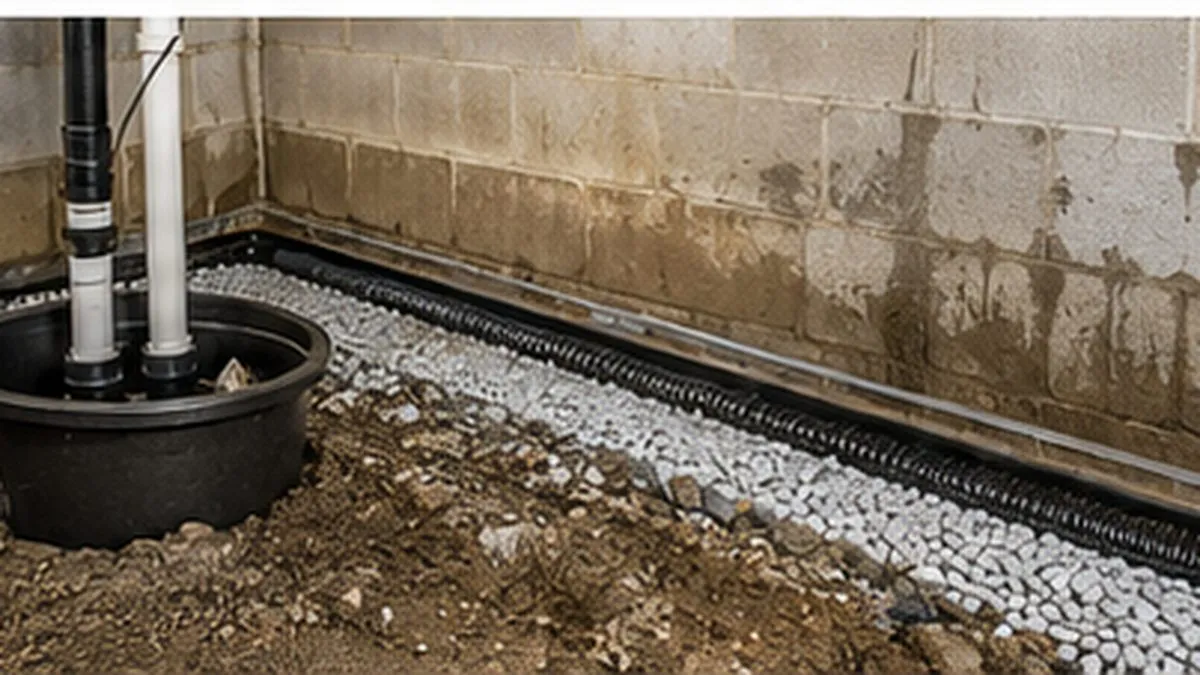
When water is already entering your crawl space, an interior french drain is the most reliable long-term solution. We excavate a shallow trench along the interior perimeter of your foundation walls and install a perforated drain pipe surrounded by washed gravel. This channel intercepts water at the point it enters — through the wall-to-footer joint, foundation cracks, or groundwater seepage — and routes it by gravity to a sump basin for removal. Interior french drains work even during heavy rain events when exterior drainage cannot keep up, and they do not require excavating around the outside of your home.
A properly sized sump pump is the active heart of any crawl space drainage system. We install the sump basin at the lowest point of the crawl space where the french drain channels converge. The pump activates automatically when the water level in the basin rises, ejecting water through a discharge line that routes it well away from your foundation. We strongly recommend battery backup sump pumps for Raleigh homes because power outages frequently coincide with the heavy storms that produce the most water intrusion. A battery backup system keeps your pump running for hours after the power goes out, protecting your home when it is most vulnerable.
While a vapor barrier primarily controls moisture vapor, it also plays an important role in waterproofing by preventing ground-level seepage from entering the crawl space. We install heavy-duty reinforced polyethylene liners across the crawl space floor, sealed at the seams and attached to the foundation walls. This liner works with the drainage system to direct any water that enters toward the french drain channels rather than allowing it to spread across the crawl space floor.
Cracks in foundation walls are one of the most direct paths for water entry. We seal foundation cracks using polyurethane injection, which fills the crack from the inside out and creates a flexible, waterproof seal that accommodates minor foundation movement without reopening. For larger structural cracks, we may recommend carbon fiber reinforcement straps in addition to sealing.
Open crawl space vents allow rain-driven water, humid air, and pests to enter freely. As part of a complete waterproofing system, we seal crawl space vents with insulated covers that block water intrusion while also reducing humidity levels. Sealing vents is a critical step that bridges waterproofing and crawl space encapsulation, creating a controlled environment beneath your home.
Sometimes crawl space water problems start outside. If your yard slopes toward the foundation or your gutters discharge too close to the home, water is being directed into your crawl space with every rain. During our free inspection, we evaluate your exterior drainage situation and provide specific recommendations for grading corrections, downspout extensions, and surface drainage improvements that reduce the volume of water reaching your foundation.
Homeowners often confuse crawl space waterproofing with crawl space encapsulation, but they solve different problems and work best when combined in the right order.
Waterproofing is active water management. It addresses liquid water that enters your crawl space from rain, groundwater, surface runoff, or plumbing leaks. The tools are french drains, sump pumps, crack repair, and drainage corrections — systems that intercept and remove water before it can pool or spread.
Encapsulation is moisture vapor control. It addresses the humidity and ground moisture that constantly rises from exposed soil in a vented crawl space. The tools are heavy-duty vapor barriers, sealed vents, and dehumidifiers — systems that block moisture from entering and maintain a dry environment over time.
If your crawl space has standing water, puddles after rain, or visible water flow, you need waterproofing first. Installing encapsulation over an active water problem traps water under the vapor barrier, which can accelerate wood rot and create conditions for mold growth that are hidden from view.
If your crawl space is damp, humid, or musty but has no standing water, encapsulation alone may be sufficient. Many Raleigh homes fall into this category — the crawl space never floods, but high humidity from the exposed ground causes ongoing moisture problems above.
Most homes with serious water problems benefit from both. We install the drainage and waterproofing system first to solve the liquid water problem, then encapsulate the crawl space to seal in the moisture control. This two-layer approach gives your home comprehensive protection from every moisture source. Learn more on our encapsulation page.
Water problems in a crawl space do not always announce themselves with a visible flood. Many homeowners live with ongoing water damage for years without realizing the crawl space is the source. Watch for these warning signs:
Standing water or puddles. Any visible water on the crawl space floor means water is actively entering the space. Even a thin film of water across part of the floor indicates a drainage failure that will worsen over time.
Water stains on foundation walls. Horizontal tide lines or dark stains on the inside of your foundation walls show where water has risen in the past. These stains indicate recurring flooding, even if the crawl space appears dry when you check it.
White mineral deposits (efflorescence). A white, chalky, or crystalline residue on foundation walls or the concrete footer is a sign that water has been passing through the concrete, leaving dissolved minerals behind as it evaporates. This is a reliable indicator of ongoing water intrusion.
High humidity readings. A crawl space humidity level above 60% creates conditions for mold growth, wood rot, and pest attraction. In Raleigh's climate, an unprotected crawl space can easily exceed 80% relative humidity during the summer months.
Musty or earthy smell in the home. Because of the stack effect, air from your crawl space rises into your living areas. A persistent musty smell on the first floor often originates from mold or decaying organic material in a wet crawl space below.
Visible mold growth. Mold on crawl space surfaces — floor joists, subflooring, foundation walls, or fallen insulation — is a clear sign that moisture levels have been high enough, for long enough, to support active fungal growth. Mold in the crawl space directly affects the air quality in your home.
Water damage in a crawl space is not a problem that stabilizes on its own. It escalates, and the costs escalate with it. Here is what happens when crawl space water problems go unaddressed:
Structural damage accelerates. Wood floor joists and beams that stay wet begin to soften within months. Within one to two years of continuous moisture exposure, structural wood can lose enough integrity to require sistering or full replacement — repairs that cost thousands of dollars more than the waterproofing that would have prevented them. If you notice sagging floors or bouncy spots, the damage may already be underway. Our crawl space repair team can assess structural damage during your inspection.
Mold spreads fast. Once mold establishes in a wet crawl space, it spreads to new surfaces quickly. Mold spores travel through the air and contaminate the living space above through the stack effect. Remediation of widespread mold is significantly more expensive and disruptive than stopping water intrusion early.
Pests move in. Standing water and high humidity attract termites, carpenter ants, mosquitoes, rodents, and other pests that thrive in dark, damp environments. Termite damage in particular can be catastrophic and is often not covered by homeowners insurance.
Energy costs increase. A wet crawl space with high humidity forces your HVAC system to work harder to condition the air in your home. Moisture-saturated crawl space insulation loses its thermal resistance and may fall from the floor joists entirely, leaving your home exposed to unconditioned air from below.
Home value drops. Active water intrusion and visible mold in a crawl space are red flags during home inspections. Unresolved crawl space water problems can delay or kill a home sale and reduce your negotiating position significantly.
The cost of crawl space waterproofing depends on the size of the crawl space, the severity of the water problem, and which components are needed. Here are the typical ranges for Raleigh-area homes:
Interior french drain system: $2,000 to $6,000. This includes excavation, perforated drain pipe, washed gravel backfill, and a sump pump with discharge line. The price depends primarily on the linear footage of drain channel required and whether the crawl space has limited access that slows the work.
Sump pump with battery backup: Typically included in the french drain installation cost. Standalone sump pump replacement or upgrade generally runs $800 to $1,500 installed.
Full waterproofing combined with crawl space repair: $5,000 to $15,000. This covers standing water solutions, interior drainage, sump pump, vapor barrier, and any necessary structural repair, mold treatment, or insulation replacement. Homes with extensive water damage or large crawl spaces fall toward the higher end.
Foundation crack repair: $300 to $800 per crack for polyurethane injection sealing.
Every job starts with a free on-site inspection where we photograph conditions, measure moisture levels, and identify the water entry points. You receive a written estimate before any work begins — no pressure, no obligation.
We provide crawl space waterproofing services across Wake County and surrounding areas, including Raleigh, Cary, Apex, Morrisville, Wake Forest, Garner, Durham, Clayton, and Holly Springs. Raleigh Crawl Space Repair is fully licensed and insured in North Carolina. Call (984) 205-1937 for a free inspection.
Crawl space waterproofing is often the first step in a complete moisture control system. Depending on your home's needs, you may also benefit from crawl space encapsulation to seal out moisture vapor, crawl space repair to address structural damage caused by past water intrusion, or crawl space insulation to restore energy efficiency after wet insulation has been replaced.
The most common causes are clay-heavy soils that hold water against the foundation, poor exterior grading that directs runoff toward the home, clogged or missing gutters, and a seasonally high water table in parts of Wake County. Heavy rain events — especially during Raleigh's wet months from May through September — overwhelm the natural drainage capacity of Piedmont soils and push groundwater into the crawl space through cracks, joints, and porous concrete.
Interior drainage is generally the more reliable long-term fix when water is already entering the crawl space, because it intercepts water at the point of entry and routes it to a sump pump for active removal. Exterior grading and downspout corrections help reduce the volume of water reaching the foundation, but they cannot stop groundwater pressure or water that enters through cracks below grade. The most effective waterproofing strategy combines both: correcting exterior drainage to reduce inflow, and installing an interior french drain system to handle whatever still gets through.
If your crawl space has standing water, recurring puddles after rain, or visible water stains on the foundation walls, a sump pump is almost certainly part of the solution. The pump is the active removal component of the drainage system — french drain channels collect the water and route it to the sump basin, and the pump ejects it away from the foundation. Without a pump, collected water has nowhere to go. We recommend sump pumps with battery backup so the system keeps running during power outages, which is exactly when heavy rain tends to cause the worst flooding in Raleigh.
Yes, if your crawl space has active water intrusion. Waterproofing addresses the liquid water problem first — drainage channels, sump pumps, and crack repair stop water from pooling under your home. Encapsulation then seals the crawl space with a vapor barrier to control moisture vapor that rises from the ground. Installing encapsulation over an unresolved water problem traps water under the barrier and can actually make conditions worse. The correct sequence is always: solve the water first, then seal the moisture.
A standalone interior french drain system typically costs between $2,000 and $6,000 depending on the linear footage and sump pump configuration. Full waterproofing combined with crawl space repair — addressing standing water, drainage, structural damage, and moisture control — generally runs between $5,000 and $15,000. The best way to get an accurate estimate is a free on-site inspection where we assess your specific conditions, measure the crawl space, and identify all water entry points before providing a written quote.
We recommend inspecting your sump pump at least twice a year — once before the spring rain season and once in the fall. Check that the pump activates when the float rises, clear any debris from the sump basin, and test the battery backup by unplugging the main power briefly. A well-maintained sump pump can last 7 to 10 years. If you hear the pump cycling frequently when it has not rained, or if it struggles to keep up during storms, it may be undersized or nearing the end of its lifespan and should be evaluated.
Waterproofing and encapsulation solve two different problems. Waterproofing is active water management — it uses french drains, sump pumps, and crack repair to remove liquid water that enters the crawl space from rain, groundwater, or surface runoff. Encapsulation is passive moisture vapor control — it uses a heavy-duty vapor barrier, sealed vents, and often a dehumidifier to block humidity that rises from the ground. Many Raleigh homes need both, and waterproofing should always be completed first so the encapsulation system is not installed over an active water problem.
Call us at (984) 205-1937 — 7 days a week