Questions? (984) 205-1937
Poor or missing crawl space insulation is one of the most common reasons Triangle homeowners deal with cold floors in winter and high energy bills year-round. Heat escapes through the floor into an uninsulated crawl space, driving up your heating and cooling costs every month.
We install durable crawl space insulation products suited to the specific conditions found in Raleigh crawl spaces, including high humidity and wide temperature swings. The right insulation, properly installed, pays for itself in energy savings over time. Every project starts with a free inspection so you know exactly what you need before any work begins.
GET A FREE INSPECTION ›Raleigh sits in IECC Climate Zone 4, a mixed-humid region where winter temperatures regularly drop into the 20s and summer humidity routinely exceeds 80%. Your crawl space sits directly between the ground and your living space, and without adequate insulation it becomes a thermal weak point that affects every room above it.
Proper crawl space insulation delivers three measurable benefits:
We inspect hundreds of crawl spaces across the Triangle every year. These are the insulation problems we see most often in Raleigh-area homes:
If any of these problems describe your crawl space, call (984) 205-1937 for a free inspection. We will tell you exactly what needs to be fixed and what it will cost.
Not all insulation performs equally in a crawl space environment. The material you choose matters as much as the R-value printed on the label, especially in a humid climate like Raleigh's.
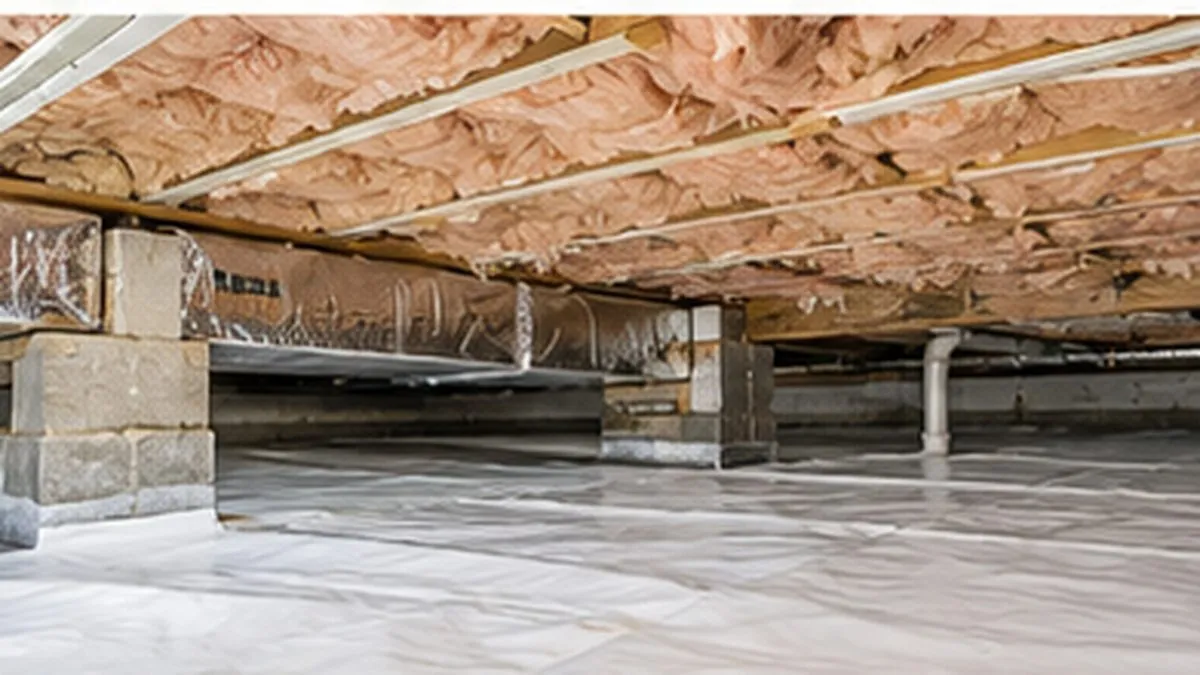
Fiberglass batts are the cheapest option and the one most commonly found in existing Raleigh crawl spaces. They are installed between floor joists and held in place with wire supports or staples. In a dry, climate-controlled environment, fiberglass can perform adequately. In a crawl space — especially a vented crawl space in the Southeast — fiberglass batts are a poor long-term choice.
The problem is moisture. Fiberglass is not a vapor barrier. It absorbs water from the air, and Raleigh's average relative humidity exceeds 70% for most of the year. Wet fiberglass loses its insulating ability, sags under its own weight, and eventually falls. If you have fiberglass batts in your crawl space right now, there is a good chance they are already compromised.
Rigid foam board — typically extruded polystyrene (XPS) or polyisocyanurate (polyiso) — is a better fit for crawl space applications. It provides R-5 to R-6.5 per inch, resists moisture absorption, and does not sag or fall. Rigid foam board is most commonly installed against the foundation walls in a sealed, conditioned crawl space rather than between the floor joists.
This approach treats the crawl space as part of the home's conditioned envelope. Combined with encapsulation and sealed vents, wall-mounted rigid foam keeps the crawl space warmer in winter and drier in summer. It is the method we recommend most often for Raleigh homes converting from a vented crawl space to a sealed one.
Closed-cell spray foam delivers the highest R-value per inch (approximately R-6.5) of any crawl space insulation. It also acts as both an air barrier and a vapor retarder, which eliminates air leaks and reduces condensation. Spray foam adheres directly to the surface it is applied to, so there is no risk of sagging or falling.
The trade-off is cost. Spray foam is the most expensive crawl space insulation option. It makes the most sense when maximum thermal performance and air sealing are priorities, or when the crawl space geometry makes rigid board installation difficult.
For most Raleigh crawl spaces, we recommend rigid foam board on the foundation walls inside a sealed, encapsulated crawl space. This combination provides excellent thermal performance, resists moisture, and avoids the chronic failure pattern of fiberglass batts in humid climates. For homeowners who want the absolute best thermal and air-sealing performance, we offer closed-cell spray foam as a premium option. We no longer recommend fiberglass batts for crawl space applications in the Triangle.
Every insulation project follows a structured process designed to solve the problem the first time, not just cover it up.
Most insulation replacement jobs are completed in one day. Larger projects that include encapsulation or structural crawl space repair may take two days.
Crawl space insulation costs in Raleigh depend on the size of your crawl space, the type of insulation, and whether underlying moisture problems need to be corrected first. Here are the typical ranges we see:
Every estimate from Raleigh Crawl Space Repair is written, itemized, and provided after a free on-site inspection. There are no hidden fees. Call (984) 205-1937 to schedule yours.
Not sure whether your insulation needs attention? Look for these warning signs:
If you notice one or more of these signs, a free inspection will confirm whether your insulation needs replacement and what the best approach is for your home.
Insulation alone does not fix a moisture problem. If your crawl space has high humidity, open vents, or no vapor barrier, new insulation — no matter how good the material — will face the same conditions that damaged the old insulation. Fiberglass will get wet and sag again. Even foam board will underperform if the crawl space environment is uncontrolled.
Crawl space encapsulation seals the crawl space from ground moisture, closes foundation vents, and brings humidity under control. When insulation is installed inside an encapsulated crawl space, it stays dry, maintains its rated R-value, and lasts significantly longer. The combination of encapsulation and insulation produces the greatest improvement in energy efficiency and home comfort.
For Raleigh homeowners who want a lasting solution, we recommend full encapsulation with rigid foam board insulation on the foundation walls. This approach converts the crawl space into a conditioned part of the home, eliminates the chronic fiberglass failure cycle, and provides measurable energy savings.
Learn more about how encapsulation protects your home: Is Crawl Space Encapsulation Necessary in Raleigh? and Does Crawl Space Encapsulation Increase Home Value?
North Carolina's energy code (based on the International Energy Conservation Code) sets minimum insulation requirements that vary by crawl space type:
Raleigh's humid subtropical climate (Climate Zone 4A) creates specific challenges for crawl space insulation. Average annual humidity in the Raleigh-Durham area hovers around 70%, and summer dew points frequently exceed 70 degrees Fahrenheit. These conditions mean that any insulation material installed in a crawl space must be able to handle persistent moisture exposure without losing performance.
This is why we recommend rigid foam board or spray foam rather than fiberglass for Raleigh crawl spaces. Moisture-resistant materials paired with proper encapsulation and humidity control are the combination that works reliably in this climate, year after year.
We provide crawl space insulation services across Raleigh, Cary, Apex, Morrisville, Garner, Wake Forest, Durham, Clayton, and surrounding Triangle communities. Licensed and insured in North Carolina. Call (984) 205-1937 to schedule your free crawl space inspection.
Crawl space insulation is one part of a healthy crawl space. Depending on the conditions under your home, you may also benefit from:
Crawl space insulation replacement in Raleigh typically costs between $1,500 and $4,000 for a standard home. The final price depends on the size of your crawl space, the type of insulation installed, and whether old material needs to be removed first. Full encapsulation with insulation runs $5,000 to $10,000. We provide a written estimate after a free on-site inspection so you know the exact cost before any work begins.
For most North Carolina crawl spaces, rigid foam board or closed-cell spray foam outperforms fiberglass batts. Fiberglass absorbs moisture in NC's humid climate, sags from the floor joists, and loses R-value quickly. Rigid foam board (R-5 to R-6.5 per inch) resists moisture and installs against foundation walls in conditioned crawl spaces. Closed-cell spray foam provides the highest R-value per inch and doubles as both an air barrier and a vapor retarder.
Crawl space insulation falls down when moisture weakens the material and the fasteners holding it in place. Fiberglass batts absorb water from humid crawl space air, which makes them heavy. The wire supports or staples that hold them between floor joists eventually fail under the added weight. Pest activity and gravity accelerate the process. Once insulation sags or falls, it provides almost no thermal resistance and should be replaced.
Yes. Old crawl space insulation should be removed before installing new material, especially if it is wet, moldy, pest-damaged, or sagging. Leaving contaminated insulation in place traps moisture against your floor joists and can promote wood rot and mold growth. Professional removal also gives your installer a chance to inspect the subfloor and joists for hidden damage before new insulation goes in.
Yes. Cold floors in winter are one of the most common signs that crawl space insulation is missing or damaged. Heat from your living space conducts through the subfloor and escapes into the cold crawl space below. Properly installed insulation with adequate R-value creates a thermal barrier that keeps floors warmer and reduces the load on your heating system.
Encapsulation is not always required before insulating, but it produces far better long-term results. If your crawl space has high humidity, standing water, or open vents, new insulation will face the same moisture problems that destroyed the old material. Encapsulation seals the crawl space from ground moisture and outside air so your insulation stays dry and performs at full R-value for years.
North Carolina falls in IECC Climate Zone 4, which requires a minimum of R-19 for floor insulation in vented crawl spaces and R-10 continuous insulation on crawl space walls in conditioned (sealed) spaces. Many Raleigh contractors recommend exceeding the minimum for better energy performance, particularly when using rigid foam board or spray foam on foundation walls.
The lifespan depends on the material and the environment. Fiberglass batts in a vented, humid crawl space may fail within 5 to 10 years due to moisture absorption and sagging. Rigid foam board and closed-cell spray foam in a properly encapsulated crawl space can last 20 years or more because they resist moisture and do not sag. Controlling crawl space humidity is the single biggest factor in insulation longevity.
Call us at (984) 205-1937 — 7 days a week